
The Organic Evolution And Grandness Of Construction MachineryThe Organic Evolution And Grandness Of Construction Machinery
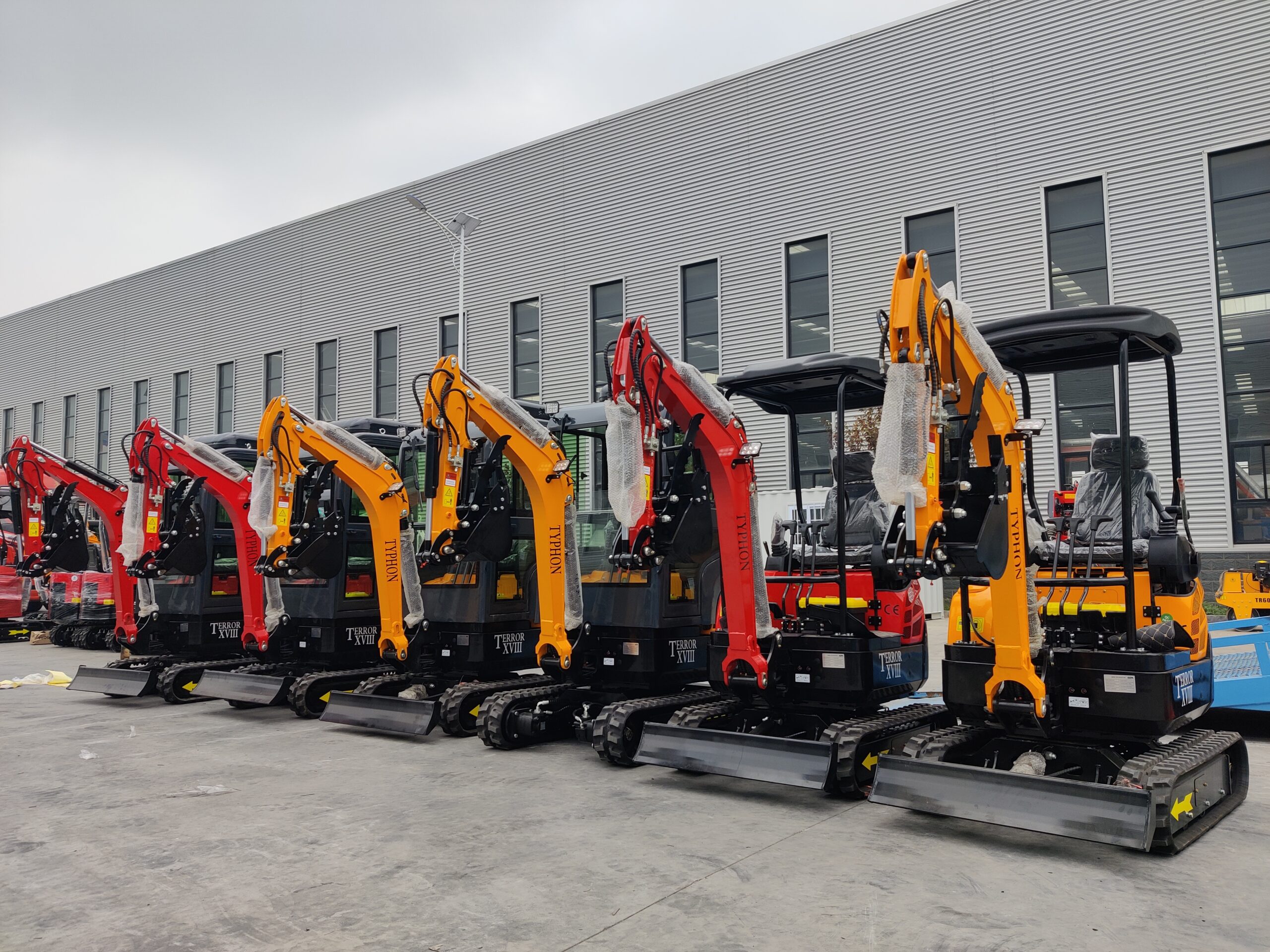
Construction machinery plays a crucial role in the development of substructure and urban landscapes around the worldly concern. From high skyscrapers to intricate road networks, the spine of modern construction lies in the hi-tech machinery that facilitates these projects. This article delves into the organic evolution, types, and import of construction machinery, highlight its affect on the industry and the worldly concern at boastfully. mini excavator. The Evolution of Construction Machinery
The history of construction machinery dates back to antediluvian multiplication when primitive tools like hammers, chisels, and simpleton pulleys were used to establish structures. The phylogeny of these tools into machinery was a easy process influenced by discipline advancements, social group needs, and the increase of civilizations.
Ancient Civilizations: The Dawn of Construction Tools
In antediluvian Egypt, the twist of the pyramids encumbered the use of staple tools such as levers, ramps, and sledges. Although vestigial by today 39;s standards, these tools were subservient in moving massive pit blocks, demonstrating early technology cleverness. Similarly, the Romans employed cranes high-powered by man or creature drive to construct aqueducts, roads, and other construction structures.
The Industrial Revolution: A Turning Point
The Industrial Revolution in the 18th and 19th centuries pronounced a significant turn place in the phylogenesis of twist machinery. The Advent of steam power led to the development of steam shovels, steamer rollers, and other mechanized equipment, drastically rising the and surmount of construction projects. This era also saw the intro of the first excavators and cranes, laying the innovation for modern construction machinery.
The 20th Century: The Rise of Modern Machinery
The 20th century witnessed speedy advancements in construction machinery, driven by the need for quicker and more competent construction methods. The of intragroup combustion engines and fluid mechanics led to the creation of mighty machines like bulldozers, backhoes, and loaders. These machines could perform tasks that previously required substantial homo push, such as earthmoving, digging, and lifting heavy materials.
The Digital Age: Automation and Innovation
In Holocene decades, the twist industry has embraced integer applied science and mechanisation. Modern construction machinery is now equipped with GPS, sensors, and computer systems that allow for pinpoint verify and monitoring. Drones, 3D printing, and robotics are also being integrated into twist processes, enabling the creation of structures with unprecedented accuracy and speed.
Types of Construction Machinery
Construction machinery can be broadly classified into several types, each designed to do particular tasks. These machines are necessary for various stages of construction, from site grooming to the final exam touches.
1. Earthmoving Equipment
Earthmoving equipment is used to move vauntingly quantities of , rocks, and other materials during construction. Some of the most park earthmoving machines let in:
Excavators: These are versatile machines equipped with a pail, arm, rotating cab, and personal chattel tracks. They are used for dig trenches, holes, and foundations, as well as for demolition and material handling. Bulldozers: Bulldozers are powerful machines with a big blade at the look used for push soil, sand, and junk. They are normally used for site and scaling. Loaders: Loaders are used to move materials such as puzzle over, sand, and dirt. They are weaponed with a face-mounted pail that can be raised and down. Backhoes: Backhoes are weaponed with a bucket on the front and a backhoe on the rear, qualification them nonsuch for dig and loading tasks.
2. Material Handling Equipment
Material handling equipment is used to transmit, lift, and place construction materials. Key examples let in:
Cranes: Cranes are necessity for lifting and animated heavy materials, such as steel beams and concrete blocks, to high places. They come in various types, including predominate cranes, Mobile cranes, and viewgraph cranes. Forklifts: Forklifts are used to lift and move materials over short-circuit distances. They are normally used in warehouses and store facilities but are also essential on construction sites for material handling. Conveyors: Conveyor systems are used to transfer materials horizontally or vertically within a twist site. They are particularly useful in big-scale projects where materials need to be touched over long distances.
3. Road Construction Equipment
Road construction requires technical machinery to create smooth and serviceable surfaces. Some of the key machines used in this process include:
Pavers: Pavers are used to lay asphalt or on roads, bridges, and other surfaces. They ascertain a smooth and even rise, which is indispensable for road timbre. Rollers: Rollers are used to pack soil, flummox, concrete, or asphalt, ensuring a solid state origination and a smooth over rise up. They come in various types, including tandem rollers and pneumatic rollers. Graders: Graders are used to create a level surface on which roads can be constructed. They have a long vane that can be well-adjusted to reach the craved mark.
4. Concrete Equipment
Concrete is a fundamental stuff in twist, and specialised machinery is used to mix, transfer, and place it. This includes:
Concrete Mixers: Concrete mixers are used to combine , sand, pose, and irrigate to create . They come in various sizes, from portable units to big truck-mounted mixers. Concrete Pumps: Concrete pumps are used to channelize from the mixer to the desired emplacemen, often at a tallness or distance that would be uncontrollable to strain manually. Batching Plants: Batching plants are used to prepare vauntingly quantities of concrete on-site. They see to it homogeneous quality and are necessity for vauntingly-scale construction projects.
5. Demolition Equipment
Demolition is used to safely and with efficiency tear down buildings and other structures. This includes:
Wrecking Balls: Wrecking balls are heavy steel balls suspended from a stretch out, used to pulverise vauntingly structures by swinging the ball into the edifice. Hydraulic Hammers: Hydraulic hammers are attachments used with excavators to break up up concrete, rock, and other hard materials during demolition. Explosives: Controlled explosives are sometimes used in demolition to wreak down big structures apace and safely. The Significance of Construction Machinery
Construction machinery is indispensable in modern twist for several reasons:
Efficiency: Machinery allows for the pass completion of tasks that would take weeks or months to do manually in a count of days. This is critical in merging fast deadlines and budgets. Safety: Machinery reduces the need for manual tug in wild environments, lowering the risk of injuries and accidents. Machines can perform breakneck tasks with preciseness and verify. Precision: Modern twist machinery is equipped with sophisticated engineering science that ensures high levels of accuracy. This preciseness is requisite for projects, such as skyscrapers and Bridges, where even a modest error can have serious consequences. Cost-Effectiveness: Although the initial investment funds in machinery can be high, the long-term benefits in damage of time saved, efficiency, and reduced labour costs make it a cost-effective pick for large-scale projects. Conclusion
Construction machinery has come a long way from the simpleton tools of ancient multiplication to the extremely advanced machines of nowadays. These machines have revolutionized the construction industry, sanctioning the macrocosm of complex structures that the Bodoni font earth. As engineering continues to throw out, the futurity of twist machinery promises even greater innovations, further transforming the way we establish and form our .
